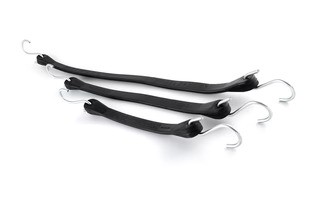
Tie Down Rubber Straps for Safe and Secure Cargo Transport
Maintaining load security during transit is a primary concern for logistics managers and independent transporters alike. Utilizing professional tie-down rubber straps provides a reliable solution for fastening cargo that requires consistent tension. Unlike rigid polyester webbing, these elastic fasteners accommodate the subtle shifting of a load while maintaining a firm grip on the attachment points. These tools are indispensable in industries ranging from agriculture to long haul trucking, where varying weather conditions and road vibrations can compromise less provide less constant pressure on a load. In a dynamic transport environment, loads often settle or shift slightly. A rigid strap might become loose if the cargo moves, but an elastic rubber strap stays taut, continuously pulling the load toward the anchor points. This constant tension is vital for securing lighter items that might otherwise bounce or shift during high-surface-area securing methods. By selecting the correct grade of rubber and hook configuration, operators can significantly reduce the risk of cargo loss and enhance overall road safety.
Essential Safety Advantages of Using Tie Down Rubber Straps for Cargo
The primary advantage of using a high-quality tie-down rubber strap system is the ability to perform travel or on uneven terrain.
Consistent Tension and Load Stability
Elasticity is the defining characteristic of these fasteners. When a strap is stretched, it generates a restorative force that holds the cargo in place. This is particularly useful for securing tarpaulins over flatbed trailers. The rubber allows the tarp to flex with the wind while ensuring the edges remain firmly attached to the trailer rail. This prevents the “parachute effect,” which can lead to increased fuel consumption and potential road hazards.
Resistance to Chemical Exposure and Oils
In many industrial settings, equipment is exposed to hydraulic fluids, diesel fuel, or specialized cleaning chemicals. Professional-grade straps are often manufactured from EPDM (Ethylene Propylene Diene Monomer), a synthetic rubber known for its exceptional chemical resistance. This ensures that the material does not become brittle or gummy when it comes into contact with common automotive fluids, maintaining its structural integrity over a much longer service life than natural rubber alternatives.
Strategic Benefits of Rubber Straps with Hooks
The utility of rubber straps with hooks lies in their ease of use and rapid deployment. In a fast-paced logistics environment, the time spent securing a load directly impacts the bottom line. Hooks allow for a “set and forget” application where the operator can quickly find a secure anchor point on a truck bed or roof rack. These hooks are typically constructed from heavy-duty steel and are designed to resist bending even under maximum extension.
Hardened Steel Hook Configurations
Standard rubber straps with hooks feature S-hooks that are either zinc-plated or vinyl-coated. The coating serves a dual purpose: it prevents the metal from scratching the paint on the vehicle or the cargo, and it provides an extra layer of corrosion resistance. In maritime or coastal environments, the salt air can quickly corrode unprotected steel, making coated or galvanized hooks a technical necessity for long-term reliability.
Versatility in Length and Thickness
Manufacturers offer these straps in a wide range of lengths to suit different applications. A short 9-inch strap might be perfect for securing a ladder to a rack, while a 41-inch version is better suited for spanning the width of a trailer. Having a variety of sizes ensures that the strap is operated within its “sweet spot” of elasticity, providing maximum holding power without overstretching the material to the point of failure.
Operational Efficiency with Rubber Tie Down Straps with Hooks
Incorporating rubber tie-down straps with hooks into a fleet’s equipment list improves operational turnaround times. Because these straps do not require complex ratcheting mechanisms or manual knotting, they can be applied and removed in seconds. This efficiency is highly valued in local delivery services where drivers make dozens of stops per day. The simplicity of the design also means there are fewer mechanical parts that could fail due to dirt, ice, or mechanical wear.
Optimizing Load Balancing Techniques
When using rubber tie-down straps with hooks, it is important to distribute the tension evenly across the cargo. Using multiple straps in a crisscross pattern ensures that the force is applied from several directions, preventing the load from sliding laterally. This technique is especially important for cylindrical items like pipes or barrels, which have a natural tendency to roll if not properly constrained.
Visual Inspection and Safety Compliance
Standard safety protocols require a visual inspection of all tie down equipment before every trip. These straps make inspection simple because signs of wear are usually obvious. Surface cracks, also known as “weather checking,” indicate that the rubber is reaching the end of its useful life. If a strap shows deep cuts or if the hook has been deformed, it must be removed from service immediately to prevent an accidental release during transit.
| Feature | EPDM Synthetic Rubber | Natural Rubber |
| UV Resistance | Excellent | Poor to Fair |
| Cold Weather Flex | High | Very High |
| Oil Resistance | Good | Poor |
| Elastic Memory | Superior | Excellent |
Technical Construction of Modern Tie-Down Systems
The manufacturing process for a tie-down rubber strap unit involves precision molding to ensure consistent thickness throughout the length of the strap. Any thin spots in the rubber would create a weak point that is susceptible to snapping under tension. By maintaining a uniform cross-section, manufacturers ensure that the stretch is distributed evenly, which maximizes the lifespan of the fastener.
EPDM Compounds for UV and Heat Resistance
One of the biggest enemies of rubber is the sun. Ultraviolet radiation breaks down the polymer chains, leading to a loss of elasticity. Professional-grade rubber tie-down straps with hooks are specifically formulated with UV inhibitors. This allows them to withstand hours of direct sunlight on the back of a truck without degrading. Similarly, heat resistance is critical for straps used near engine compartments or in desert climates where surface temperatures on metal trailers can exceed 60°C.
Anti-Marring Coatings for Sensitive Surfaces
For transporters moving finished goods or painted machinery, the contact point between the hook and the cargo is a potential area for damage. High-end rubber straps with hooks utilize thick plastisol or vinyl coatings on the metal components. This provides a soft interface that absorbs vibrations and prevents the metal hook from vibrating against the surface of the cargo, which would otherwise lead to paint chips or structural abrasions.
Maintaining Performance in Extreme Weather Environments
Weather variability is a constant challenge in the transportation sector. A strap that works perfectly in the summer heat must also function during a winter freeze. The chemical engineering behind modern rubber tie-down straps with hooks ensures that the material remains pliable even when temperatures drop well below freezing.
Cold Weather Elasticity and Performance
Standard rubber can become rigid and “glassy” in sub-zero temperatures, making it difficult to stretch and prone to snapping. Professional-grade EPDM maintains its flexibility down to -40°C. This allows drivers in northern climates to secure their loads with the same confidence as those in temperate regions. The ability to maintain a consistent stretch ratio regardless of the temperature is a key indicator of a high-performance industrial strap.
Moisture and Mildew Resistance
In wet climates, moisture can seep into the pores of some materials, leading to the growth of mold or mildew, which weakens the structure. Synthetic rubber is non-porous, meaning it does not absorb water. This makes tie-down rubber straps an ideal choice for outdoor storage and open trailer transport where rain and snow are expected. After a trip in wet conditions, the straps can simply be wiped down or air dried without the risk of rot that affects natural fiber ropes.
Safety Protocols for Stretching and Attachment
Proper application is just as important as the quality of the strap itself. Operators should never overextend a strap beyond its rated capacity. Most experts recommend a maximum stretch of 50 percent of the original length. For example, a 24-inch strap should not be stretched beyond 36 inches. Overextending the rubber leads to internal tearing and significantly increases the risk of the hook snapping back toward the operator.
Avoiding Sharp Edges and Abrasion Points
While the rubber is durable, it can be cut by sharp metal edges or abrasive surfaces. When routing rubber tie-down straps with hooks over a load, it is important to ensure the rubber does not rub against a sharp corner. Using corner protectors or pieces of old fire hose can provide a buffer that prevents the strap from being severed during transit.
Proper Hook Orientation for Maximum Security
The orientation of the hook can affect the security of the connection. Ideally, the hook should be pointed away from the tension to ensure it “seats” deeply into the anchor point. A hook that is only partially engaged can slip out if the strap vibrates, potentially causing the entire load to become unsecured.
By prioritizing high-quality materials and adhering to strict safety protocols, businesses can utilize tie-down rubber straps, rubber straps with hooks, and rubber tie down straps with hooks to create a secure and efficient transport workflow. These simple yet effective tools remain a cornerstone of industrial cargo management.